Category Archives: Movie Reviews

Movie Review: Jackass Presents: Bad Grandpa

Bad GrandpaTitle: “Jackass Presents: Bad Grandpa”

Director: Jeff Tremaine

Writers: Johnny Knoxville, Spike Jonze, Jeff Tremaine

Stars: Johnny Knoxville, Jackson Nicoll, Greg Harris

My rating: 2 out of 5 stars

For those who don’t know, Jackass is the inevitable evolution of “Candid Camera.” Stuntmen go out, pull a bunch of stunts in public (sometimes; sometimes it’s a closed set) and film the people’s reactions. After three Jackass movies, we get “Bad Grandpa.”

What makes this one different is that they put the stunts in the context of a story, as opposed to their usual randomness. Johnny Knoxville, under heavy makeup, plays Irving Zisman, a recent widower who is charged with taking his grandson to his deadbeat father. Along the way, hilarity ensues. Or that’s the idea.

This movie has a fundamental problem: It is a movie in two parts that didn’t fit together and conflict with each other. The story creates too much structure for the hidden camera aspect to work in full freedom that well. The hidden camera part distracts and detracts from the story. The story is extremely simple and predictable, but admittedly, if you’re seeing this movie then you’re seeing it for the hidden camera parts. And the problem there is they get bogged down by trying to stay in the context of the story. So it begs the question: Why did they bother?

The movie is barely passable. To its credit, they do manage stay on the story, and some of the jokes and stunts are somewhat funny, although a lot are more cringe-worthy, and it doesn’t quite hold the same trainwreck magic where you can’t look away that “Jackass” has. The makeup job they did on Johnny Knoxville is impressive, as well, especially since it’s supposed to fool real people and manages to do so. If you’re just in it to see the stunts, you’re better off checking out one of the Jackass movies, as this one doesn’t measure up.

“Jackass Presents: Bad Grandpa” earns 2 out of 5 stars.

Movie Review: The Lone Ranger

The Lone RangerTitle: “The Lone Ranger”

Director: Gore Verbinski

Writers: Justin Haythe, Ted Elliott, Terry Rossio

Stars: Johnny Depp, Armie Hammer, William Fichtner

My review: 1 out of 5 stars

Oh, I have been dreading having to write this one, mostly because I don’t want to experience this movie again, even through memory.

The Lone Ranger began in 1933 on the radio, and has evolved through various media to finally arrive on Disney’s shores with this so-called movie. Except that this isn’t really a “Lone Ranger” movie. In reality, the story is told from a San Francisco fair in 1933 by an aged Tonto to a young boy. This is an origin story, and a poor one at that. You see, our Lone Ranger isn’t really a Ranger at all, but is deputized at the last minute to help track down the Butch Cavendish gang. After they’re betrayed and nearly all killed, Tonto (who has been tracking Cavendish and calls him the Wendigo) finds the bodies but discovers that John Reid is still alive. But Reid turns out to be pretty much a buffoon, and Tonto has to train him to be a hero, or at least appear like one.

This is more a Tonto movie than anything else, and it has a whole host of other problems than just the film’s title. First, the buffoonery isn’t funny. It’s not. Secondly, the jokes are timed so poorly that it’s awkward rather than funny. For instance, the horse Silver behaves weirdly throughout the movie. After we witness a huge massacre and the Lone Ranger and Tonto are sitting near the aftermath trying to think of a plan, they turn to find the horse standing in a tree wearing a hat. Tonto remarks, “Something very wrong with that horse.” It’s not funny! The number one rule in comedy is timing. We just witnessed a huge massacre and everything is played to where the audience is supposed to feel sad and hurt by all these deaths. Then they crack a joke! No! Just no!

It’s not until the last 15 to 20 minutes that it finally becomes a Lone Ranger movie, but even then there are problems. Like Gore Verbinski’s other films, the action is random and physical laws don’t apply. Things are happening all over the place, we’re not sure where people are, and everything works purely out of convenience to move the action along. Rather than looking cool, it looks ridiculous, like some kind of live-action cartoon.

Aside from these technicals, the movie is boring and way too long at nearly two and a half hours. It should have been trimmed down at least 40 mintues. And it’s telling that we end the movie with watching Johnny Depp as an aging Tonto walking through the desert during the credits. That’s it. This isn’t a build up to anything. It’s just him walking into the distance across the desert because that’s much more exciting than having the credits roll on a black screen.

I’m going to give myself an aneurysm if I have to keep talking about how bad this movie was. I’m giving it one star instead of only half a star because I can tell that the filmmakers at least tried, even if it didn’t work at all. There was definitely effort put into this movie, but it can and should be skipped. Seriously, don’t bother with this one.

“The Lone Ranger” earns 1 out of 5 stars.

Movie Review: The Book Thief

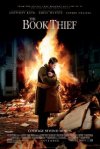
The Book ThiefTitle: “The Book Thief”

Director: Brian Percival

Writers: Michael Petroni

Starring: Sophie Nélisse, Geoffrey Rush, Emily Watson

My rating: 2.5 out of 5 stars

Based on Markus Zusak’s novel of the same name, “The Book Thief” follows young Liesel, a girl in Germany during World War II, who is sent to live with adopted parents for what early on are unknown reasons. Beginning the movie illiterate, she learns to read with the help of her adopted father before a young Jewish man seeks refuge with them. She begins stealing books to read and share with her new family (although she maintains that she’s only borrowing the books), a potentially dangerous act in Nazi Germany.

Liesel’s story is narrated by Death who stalks her and those around her, which creates an interesting touch, although it feels underutilized. There was a lot more potential in using such narration. While well acted (Sophie Nélisse shows enormous promise as an actress) and it has an actual story, it falls apart in using that story to convey any message. The films seems confused about what it’s trying to say. I admit that I have not yet read the book, so I went into this movie cold. But something feels like it got lost in translation when moving from the page to the screen.

Another complaint is that the movie seems to have been made with a young adult audience in mind, much like the book. The problem here is that scenes that would be quite violent in reality are toned down to the point where they look ridiculous. For example, when a building blows up, we see the bodies of its residents lying peacefully in the street after being removed from the rubble. In reality, the scene would likely be far more gory. I understand the need to tone down images to reach a particular audience, but in this case it looked silly and yanked me out of the film.

While well acted and containing a cohesive story, “The Book Thief” still lacks meaning and imagery that truly convey the seriousness of the situation. I want to say this movie is more worth your time, but I just can’t bring myself to do so.

“The Book Thief” earns 2.5 out of 5 stars.

Movie Review: Saving Mr. Banks

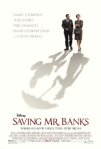
Saving Mr BanksTitle: “Saving Mr. Banks”

Director: John Lee Hancock

Writers: Kelly Marcel, Sue Smith

Starring: Emma Thompson, Tom Hanks, Annie Rose Buckley

My rating: 3 out of 5 stars

In 1961, P.L. Travers (played by Emma Thomspon) went to Los Angeles to discuss adapting her series of children’s book about a magical nanny named Mary Poppins to the silver screen. But she has no intention of making it easy, especially when she feels that the people working on the adaptation don’t understand the point of the books, including Walt Disney himself (played by Tom Hanks in a role that I’m sure was intimidating). Thus begins a battle between the two over the movie adaptation that would eventually become the classic “Mary Poppins.”

This film is cute, but not revelatory. There are a lot of in-jokes with this movie, so for the two of you who haven’t seen “Mary Poppins,” you might not get them. While the performances are very good, as you would expect from such a high quality cast including Colin Farrell who plays Travers’ father, the editing becomes troublesome and the cuts happen too often. Switching back and forth between the “present day” Travers of 1961 and her earlier life following her relationship with her parents (and the real-life inspiration for Mary Poppins) happens often and without warning, and doesn’t give the actors enough continuous screen time to truly appreciate their performances.

From a technical perspective, this movie is fine, but artisticly it’s just okay. It’s a cute backstory, but like other movies based on a true story of a high profile event, we know how it ends, so the audience doesn’t get the feeling that there’s much at stake. The real drama comes from the scenes of Travers early life and what happened to her family, something that isn’t as widely know. But the focus and fun with this movie lies in the 1961 scenes and the making of “Mary Poppins,” so each era depicted on screen does something the other one doesn’t and fails to combine them into a single cohesive and dramatic whole.

It’s okay, but this film has its problems. What it does in terms of individual elements it does well, but it fails to combine them to make a singular well-made movie.

“Saving Mr. Banks” earns 3 out of 5 stars.

Movie Review: Mandela: Long Walk to Freedom

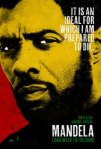
Mandela - Long Walk to FreedomTitle: “Mandela: Long Walk to Freedom”

Director: Justin Chadwick

Writers: William Nicholson

Stars: Idris Elba, Naomie Harris, Terry Pheto

My rating: 2 out of 5 stars

“Mandela: Long Walk to Freedom” is one of those movies that makes you feel guilty because you feel that you should like it, but you don’t. Based on Nelson Mandela’s autobiography Long Walk to Freedom, this biopic shows Nelson Mandela from his days as a lawyer up to being elected president of South Africa in 1994.

Nelson Mandela was a great man, and frankly he didn’t deserve this mediocre treatment of his life. While Idris Elba does his best to sell the role of Mandela, and he does a respectable job, various events are glossed over. For example, very little background is given to describe what was so bad about apartheid, or even what apartheid was (while it did amount to suppression of the black population, the actual answer is rather complex). For the most part, the film mostly says “Black good, white bad,” with a few exceptions. It’s a simplistic treatment of a complicated political era, especially as apartheid was ending.

The editing is another annoying aspect of this film. The film jumps around and shows parts of a tribal ritual with little to no context. The cinematography and editing giving the film a very stylized look, especially in the beginning. But it feels out of place. Stylizing the story of such a remarkable human being feels unnecessary and at time even disrespectful.

This is one of those films that you go into really wanting to like it, but you feel hard pressed to do so. It takes an effort to find things to like or truly commend the filmmakers for, and ultimate, this movie is a major disappointment.

“Mandela: Long Walk to Freedom” earns 2 out of 5 stars.